How ATE and OSAT Drive Malaysia’s Industrial Growth
In the rapidly evolving global electronics and semiconductor ecosystem, Malaysia has emerged as a vital node – leveraging its capabilities in both Outsourced Semiconductor Assembly and Test (OSAT) and Automated Test Equipment (ATE) to advance industrial growth, attract foreign investment, and generate high-value employment. For industrial real‐estate professionals, particularly those focused on large-scale factory properties and prime industrial land, the implications of Malaysia’s semiconductor ambitions offer significant opportunity. This article explores How OSAT and ATE drive Malaysia’s industrial growth, outlines the ecosystem dynamics, examines the government’s strategic push, and highlights what this means for industrial property – and why your firm (Industrial Factory Hub) can capitalise in this environment.
Malaysia’s Semiconductor Backbone: OSAT as a Growth Engine
OSAT: Definition and Malaysia’s Role
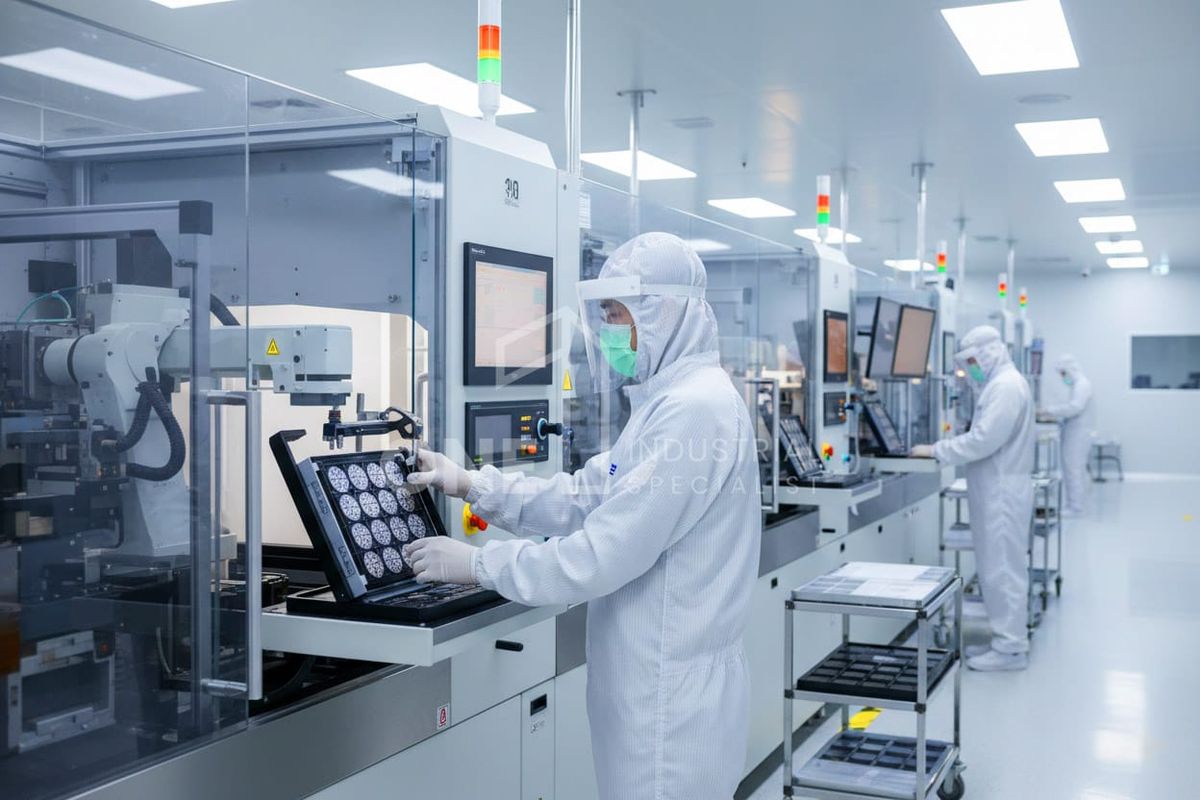
OSAT refers to firms that specialise in the back-end processes of semiconductor manufacturing – assembly, packaging, and test of integrated circuits (ICs) after wafers have been fabricated. Malaysia has nurtured a strong OSAT base, becoming a trusted global hub for these services.
- Studies show Malaysia accounts for about 13% of the global OSAT market and handles a substantial portion of global semiconductor testing and packaging volumes.
- The back‐end assembly and test operations are concentrated in regions such as Penang, Kedah, and West Malaysia, where established infrastructure and clusters (e.g., industrial parks) exist.
Why OSAT is Important for Industrial Growth
- Export Strength: OSAT firms help Malaysia embed itself in global value chains. The back‐end services are labour‐ and capital-intensive, create exportable output, and drive high levels of manufacturing exports. For example, Malaysia’s semiconductor sector is projected to reach RM 212.5 billion (US$46 billion) by 2028, largely driven by OSAT and related firms.
- Foreign Direct Investment (FDI): Major global OSAT companies recognise Malaysia’s ecosystem strengths – skilled workforce, infrastructure, favourable location, and logistics linkages – and invest accordingly. One example: Advanced Semiconductor Engineering Inc (ASE) launched its fifth plant in Penang in 2025 to expand its OSAT and advanced packaging capabilities in Malaysia.
- High‐Value Job Creation: Beyond sheer volumes, OSAT operations generate medium to high‐skill employment—technicians, engineers, test analysts, quality assurance staff. According to one official document, Malaysia’s semiconductor and electronics workforce constitutes around 4% of the total workforce, and many of those jobs are above the national average salary.
- Industrial Land & Factory Demand: OSAT firms need large industrial footprint – assembly lines, cleanrooms, packaging halls, test floors, logistics, storage for fragile wafers – and this drives demand for well-serviced industrial estates and large floor‐area factories. For real‐estate developers and brokers, this means increased competition for high-spec industrial zoning, high-power utilities, cleanroom-capable factories, and good connectivity.
OSAT – Value Chain & Malaysia’s Position
While Malaysia’s strength is firmly in the back‐end OSAT space, there is a clear push to move up the value chain. The local industry remains heavily concentrated in third‐party IC packaging and test services.
From a property perspective, this means that while large footprint, less-stringent cleanroom factories might suffice today, the next generation of OSAT and advanced packaging may require even higher spec facilities (ultra-clean floors, advanced cooling, higher power loads, logistics for hazardous materials) that will demand premium industrial real‐estate.
Get the full industrial insights on our website: https://oneindustrialspecialist.com/how-ate-and-osat-drive-malaysias-industrial-growth/